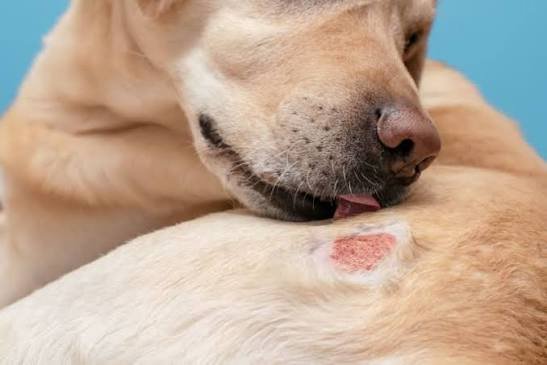
You notice a small patch of hair missing from your dog’s face.
Perhaps the skin looks red or irritated. Maybe your dog is scratching more than usual.
It is easy to assume that it is simply an allergy, a fungal infection or a minor skin problem.
But there can be many different causes of skin disease in dogs — and one of them is demodicosis.
Understanding the condition can help pet owners recognise when a skin problem needs veterinary attention.
What is demodicosis?
Demodicosis is a skin condition associated with an overgrowth of Demodex mites.
Small numbers of these mites can normally be found on the skin of dogs without causing disease. Problems can occur when the mite population increases and causes inflammation and damage to the skin.
The condition is therefore not simply about the presence of mites.
The dog’s individual immune response also plays an important role.
What does demodicosis look like?
The signs can vary depending on the individual dog and the severity of the condition.
Common signs may include:
- Hair loss
- Red or inflamed skin
- Scaling or crusting
- Darkening or thickening of the skin
- Itching, particularly when there is a secondary infection
- Small bumps or pustules
- Changes in the appearance of the coat
Hair loss around the face, eyes and front legs can sometimes be noticed in early cases.
However, these signs are not unique to demodicosis.
Other skin conditions can look similar, which is why proper diagnosis is important.
Localised and generalised demodicosis
Demodicosis can occur in different forms.
In localised cases, only a small number of areas may be affected. Some young dogs may develop limited skin lesions that can resolve with appropriate veterinary management.
In generalised cases, larger areas of the body may be affected. These cases can be more serious and may be associated with secondary bacterial infections and other complications.
The distinction between these forms is important because management may differ.
Why does it happen?
Demodex mites are associated with the normal skin environment of dogs, so the presence of mites alone does not necessarily mean a dog has demodicosis.
The development of disease is influenced by the dog’s immune response and other factors.
In young dogs, demodicosis can occur during the development of the immune system.
In adult dogs, widespread or persistent demodicosis may require further veterinary investigation to identify underlying factors that could be affecting the animal’s health.
This is one reason why generalised demodicosis in an adult dog should not simply be treated as an ordinary skin problem.
Why diagnosis matters
Hair loss and skin irritation can have many possible causes.
Allergies, parasites, bacterial infections, fungal infections and other dermatological conditions may produce similar-looking signs.
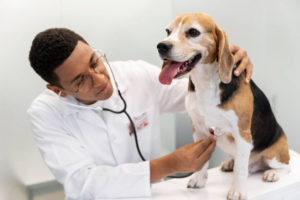
A veterinarian may therefore need to examine the skin and perform appropriate diagnostic tests, such as skin scrapings, to determine what is actually causing the problem.
Getting the diagnosis right is important because different skin conditions require different approaches to management.
What can pet owners do?
If your dog develops unexplained hair loss, persistent skin irritation or recurring skin problems, arrange a veterinary examination.
Avoid repeatedly changing shampoos or applying different products without knowing the underlying cause.
Keep your dog’s environment clean and maintain good general hygiene.
Most importantly, follow the treatment and follow-up recommendations provided by your veterinarian.
Skin conditions can sometimes take time to resolve, so monitoring the dog’s progress is also important.
A reminder about your dog’s overall health
Demodicosis is a good example of why a visible skin problem may sometimes be connected to a bigger picture.
A veterinarian does not only look at the skin. They may also consider the dog’s age, health history, medications, clinical signs and overall condition.
The goal is not simply to manage what can be seen on the skin, but to understand why the problem is happening in the first place.
Supporting better veterinary care
At FISTERRA, we believe that improving animal health involves connecting veterinary professionals with the knowledge, products and solutions they need.
We work with international animal-health manufacturers to bring relevant veterinary solutions to the Malaysian market.
Infervac is one of the veterinary products within our portfolio. Veterinary professionals who would like further product information may contact the FISTERRA team.
For pet owners, the key message is simple:
Not every skin problem is the same. When something doesn’t look right, let your veterinarian find out why.